The Clause Is the Look: How Owning the Story Became 2026’s Boldest Flex
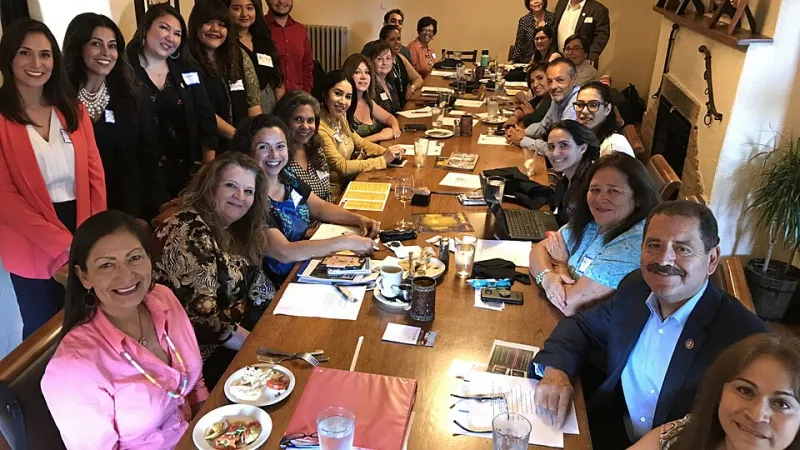
Photo: Deb Haaland, Public domain, via Wikimedia Commons
For years, the red carpet question was simple: who are you wearing? In 2026, the better question is: what did you negotiate? That is not a joke about lawyers. It is the new glamour. The boldest women in entertainment are not just showing up in the story. They are making sure they own a piece of it—and they are doing it in writing.
This is the year the contract became an accessory. Not because women suddenly discovered paperwork, but because they stopped pretending it was beneath them. The clause is the look. The credit is the flex. The backend point is the quiet luxury.
The New It Bag Is an IP Rider
“Five years ago, a client might ask for a bigger trailer,” says Rachel Stein, an entertainment lawyer who represents actors, writers, and producers. “Now the first questions are about ownership of underlying material, approval over marketing, and what happens if the project moves to a different platform. The ambition has moved from the set to the deal.”
That shift is not vanity. It is strategy. In a business that keeps rewriting its own rules, the people who own the story have more control than the people who simply appear in it. Women in front of and behind the camera are asking for IP riders, sequel rights, producing credits, and backend participation earlier and more confidently than ever. They are treating the contract not as the end of the creative conversation but as the continuation of it.
And yes, it looks good. There is something undeniably glamorous about a woman who can walk into a room, talk about character arcs and costume design, and then ask a very calm question about revenue participation. It is the same energy as a flawless red-carpet look: controlled, intentional, and impossible to ignore.
Credits Are Not Decoration
For a long time, credits were treated like decoration—nice to have, easy to trade away, not the main event. In 2026, the smartest women in the room know better. A credit is a receipt. It says: I was here, I did the work, and I get to carry this forward.
“A credit is not a thank-you,” says Danielle Cho, an agent who represents writers and directors. “It is a business asset. It affects your next quote, your next offer, your next negotiation. If you give it away because you are afraid of looking difficult, you are paying for someone else’s future with your own.”
That is why the women winning in 2026 are not shy about asking for the right title. They are not rude about it, but they are specific. Story by. Written by. Created by. Executive producer. The language matters. The placement matters. The size of the font might feel petty until you realize that the font is the point: it is proof that you were not a guest in your own project.
Backend Is a Love Language
Backend has a reputation problem. It sounds like greed to people who have never negotiated it and like fantasy to people who have been burned by Hollywood accounting. But in 2026, backend is increasingly being reframed as a love language—a way of saying, I believe in this enough to bet on it.
“If you believe in the project, take a piece,” Stein says. “That is not a suspicious request. That is a commitment. The people who ask for backend are usually the people who plan to stay involved long after the premiere.”
Of course, backend is only as good as the deal around it. The women who do this well are not collecting vague promises. They are asking for clear definitions, transparent reporting, and the kind of deal structure that does not require a detective to understand. They are being romantic about the work and ruthless about the math. That combination is the whole point.
The Red Flag Is a Vague Promise
Here is the least glamorous sentence in entertainment: we will take care of you. It sounds warm. It usually means someone is hoping you will not ask for specifics. In 2026, the boldest move is to smile, say thank you, and then ask for it in writing.
That does not mean turning every creative conversation into a deposition. It means knowing the difference between enthusiasm and a deal. It means hiring the lawyer, reading the rider, asking for the plain-language summary, and not letting anyone make you feel high-maintenance for wanting clarity. High-maintenance is a myth designed to keep people from asking questions. Clarity is a power move.
“The women who negotiate well are not the ones who make the most noise,” Cho says. “They are the ones who know exactly what they want before they walk in. They are calm because they are prepared.”
Wear the Contract
The old glamour was about being chosen. The new glamour is about being covered. Not just by a great stylist or a great publicist, but by a contract that respects your time, your work, and your future. That is the accessory that does not go out of style.
So yes, ask who she is wearing. Then ask what she negotiated. Ask about the credit, the backend, the approval rights, the exit clause. Ask like it is the most natural question in the world, because in 2026, it is. The clause is the look. And the women who wear it well are not waiting for permission to own the story. They are putting it in writing.


